Best Things to Do:
- 1. History of the cafés of Paris
- 2. Paris and its cafés
- 3. The first cafés of Paris
- 4. The importance of cafés in spreading ideas
- 5. In the 19th century
- 6. In the 20th century
- 7. More on this topic
- 8. About Natália
- 9. Also read the other articles written by Natália:
- 10. Discounts and gifts for Conexão Paris readers
- 11. Subscribe to the newsletter and receive the latest news from Conexão Paris
History of the cafés of Paris
History of the cafés of Paris. When were they created? How did they come about? Which are the oldest?
Article written by historian Natália Bravo
Paris and its cafés
"In front of the cup of coffee, one chatters; 'conversation necessarily accompanies coffee or tea, it is almost its true reason for being.' Coffee, just born, was already a literary coffee."
Paris and its countless cafés. Every Parisian, whether born, adopted, or even from the heart, knows and recognizes Paris through its cafés.
The café (establishment) is that faithful companion, present every day, to whom we turn whenever we can. In joy and in sorrow. Alone or with company. During hurried mornings before work and in the late afternoons after a tiring day, to watch life go by. Preferably with a glass of wine in hand.
The first cafés of Paris
The first cafés in Paris date back to the mid-17th century.
From the moment they appeared, they enjoyed enormous popularity among the privileged who were allowed to frequent them: in cafés, some of the more noble elements of society gathered to discuss, converse, and conspire, between sips of that drink, which at the time was so valuable and promised stimulating effects.
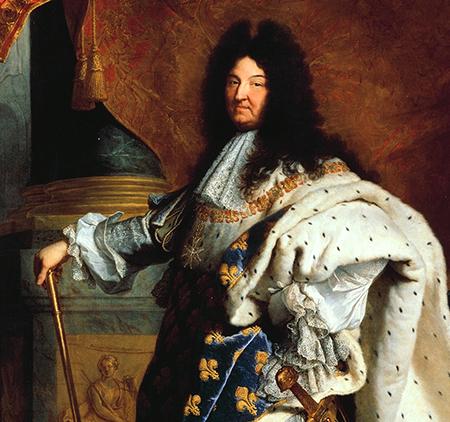
"Others, yes, from the beginning, it was a political café". This statement is from anthropologist Jules Leclant, author of the text "The café and cafés in Paris." According to him, rumors that the tables of the newly inaugurated cafés had criticisms of the government reached the ears of King Louis XIV, who asked one of his advisors whether it would not be wise to "prevent its operation in the future."
Could the king have foreseen the relationship between the erosion of absolutism, which would peak during his regency, and the circulation of political and philosophical ideas in cafés like Procope, a hundred years later?
Looking back at history might lead us to believe so: Louis XIV, in the mid-1680s, would then be a kind of visionary: he foresaw and feared, with a century's advance, the role of cafés in disseminating the principles and values that would contribute to the overthrow of the monarchy in France.
But history is not as simple, nor as fantastic and predictable as some narratives make it seem.
The importance of cafés in spreading ideas
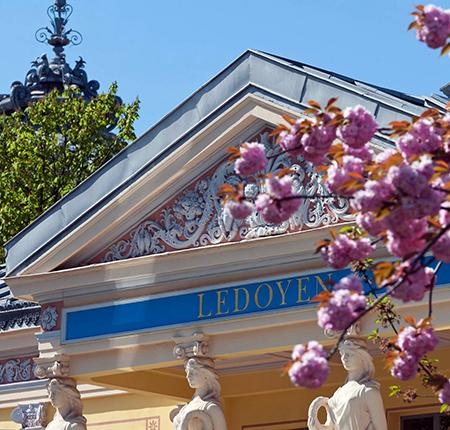
Louis XIV did not prohibit the operation of cafés, and over the centuries they transformed into one of the most characteristic scenes of the Parisian landscape.
Initially frequented only by great thinkers, enlightened ones, artists, and personalities of the time, the inauguration of the first cafés during the Old Regime already reveals some elements of a transforming society.
Unlike literary salons, where members of the highest nobility received, in the luxurious environments of their property, only a few chosen ones from the most distinguished families of Parisian aristocracy, in cafés, political, literary, and cultural exchange could occur among a more diverse audience, in a public space, allowing for criticism of the king and the nobility itself, while in the private space of literary salons, criticism was sacrificed in favor of pure and simple adulation of the king and his favorites.
Hence the importance of cafés in disseminating the subversive and revolutionary ideas that shook the foundations of the monarchy in France. Interesting, isn't it?
In this sense, the cafés of Paris are both products of and witnesses to the great transformations through which European societies have gone.
It is possible to tell and better understand the history of the city, and even the country, from the observation of the movement in its cafés over time. The social and ideological history of France also passes through its cafés.
In the 19th century
In France in the mid-1850s, much had already changed in relation to the time of monarchical absolutism.
In a little over five decades, the French witnessed the French Revolution, the rise and fall of Napoleon Bonaparte, the restoration of absolutism with Louis XVIII, the Revolution of 1830, and the crisis of the government of Louis Philippe, the bourgeois king, amidst the emergence of social movements such as those of workers and suffragists.
In this transforming world, a decline in the aristocratic values that sustained the Old Regime could already be observed, gradually being replaced by a new set of ideas characteristic of the group that came to power: the bourgeoisie.
In this context, the presence in prestigious places like cafés slowly became more diverse. As society transformed, the frequency of people in cafés was also changing.
Gentlemen of less noble descent began to be admitted, as well as a few women, observed by the male public with a mix of shock, curiosity, and disbelief, as can be inferred from the painting by Ernest Ange Duez (1843-1986) set in LeDoyen, a traditional restaurant that still operates today in the 8th arrondissement, and boasts the three coveted Michelin stars.
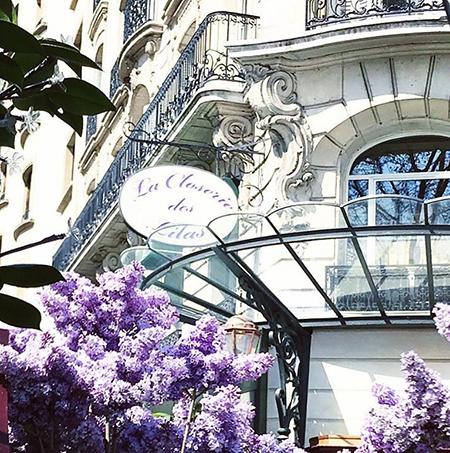
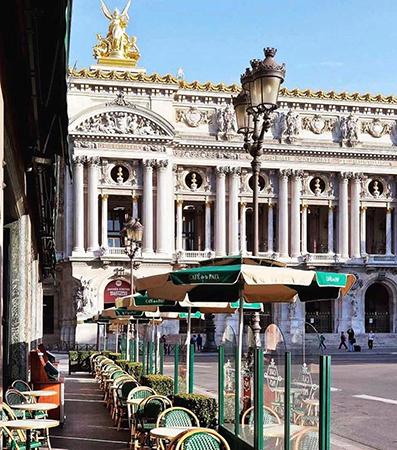
At the turn of the 20th century, the city of Paris already had several hundred cafés, spread across the most popular quartiers of the time: among them, Le Guerbois, Le Dôme, Closerie des Lilas, Café de la Paix, as well as the now famous Les Deux Magots and Café Flore.
According to French journalist Michel Bradeau, it was during this period that "Intellectual life descended from the hill of Montmartre, crossed the Seine, and settled on the 'Rive gauche', the left bank, first in Montparnasse."
The city, modernized by the Haussmannian reforms and experiencing the peak of the euphoric period known as Belle Epoque, welcomed an increasing number of immigrants and artists of all kinds, attracted by the inspiring aura of the City of Light.
In the 20th century
Throughout the 20th century, much was discussed, produced, and witnessed at the tables of Parisian cafés: artists, intellectuals, writers, patrons, prominent individuals, and ordinary people shared with anxiety the news of World War I, the hardships of the 1920s, and the rise of tensions and rivalries of the 1930s, marked by the rise of fascism and the imminence of a new war.
At the Flore, Simone de Beauvoir and Sartre debated intensely, trading their hypotheses about the future: to the more pessimistic reports and opinions, Beauvoir countered with an almost unwavering belief in the ability of European countries to resolve the crisis on the continent, increasingly laid bare by Hitler's militaristic politics. The German invasion of Poland a few years later would mark the end of that period of crisis and uncertainties known as the interwar years. Again, it was war.
And thus, over the centuries, the café has been transformed into a true character of French history: more than a place of memory, socializing, and conviviality, the café has witnessed a diverse historical process, whose complexity and richness still captivate us.
In cafés, history was lived, written, and continues to be written, and all of us who frequent them are their anonymous protagonists, alongside many great figures of the past who evoke not only admiration but also our desire to return to them. Always. Once again.
On our YouTube channel, we have a beautiful video about the cafés of Paris, click here.
Also, check out our infographic on the subject, click here.
Want to know where to buy the chairs from the cafés of Paris? See here.
About Natália
Natália is a historian from Rio de Janeiro. After completing her master's degree and working for years teaching History, she packed her bags and headed toward realizing a long-held dream: to continue her studies in Paris.
In addition to studying, she offers historical guided tours in Paris, including: Paris and the French Revolution, Hitler in Paris, and The Impressionists' Paris (click here for more information).
To make your reservation and get more information, contact Natália at the email [email protected]
Also read the other articles written by Natália:
- Click here to learn about the historical walking tours in Paris offered by Natália.
- History of the cafés of Paris
- Reims, in the Champagne region, and the world wars
- The artistic and literary life in 1920s Paris
- Berthe Morisot, the only woman among the Impressionists
- Women and tourism
- Paris with a Brazilian historian guide
Discounts and gifts for Conexão Paris readers
- GALERIES LAFAYETTE: Gifts for purchases over 50 euros made in Galeries Lafayette Haussmann, click here for more information and to download the vouchers.
- PERFUMERY FRAGRANCE DE L'OPÉRA: €10 off for every €150 spent at the Perfumery Fragrance de l'Opéra - click here for all the details and to download the voucher.
- PHARMACY CARRÉ OPÉRA: 10% off purchases made at the Pharmacy Carré Opéra - click here for all the details and to download the voucher.
- HOTEL SAINT ANDRÉS DES ARTS (charming 4-star in Saint Germain): 10% off + 1 bottle of wine + breakfast - use the code paris-story.com when making your reservation on the hotel site, click here to access.
- TRAVEL INSURANCE: 5% off your Travel Insurance using the code paris-story.com. Travel insurance is one of the documents that may be required for your entry into Europe, click here to learn more.
- TICKETS: 5% off tickets, tours, and trips sold on Tiqets using the code paris-story.com, click here to access the site.