Best Things to Do:
- 1. How to visit Bois de Boulogne
- 2. Where to find the main attractions of the park
- 3. From the Louis Vuitton Foundation to the Chinese pagoda
- 4. Stroll among the lakes and the Shakespeare Garden
- 5. Zen gardens, forests, and sports venues
- 6. Activities and events
- 7. Where to eat
- 8. A leap back in time...
- 9. Information
- 10. How to get to Bois de Boulogne
- 11. Free entry
- 12. Opening hours
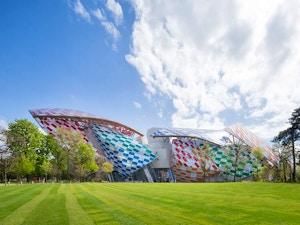
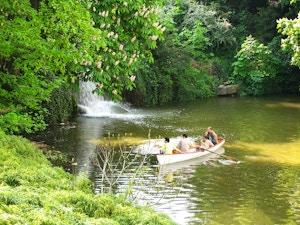
Botanical gardens, futuristic museums, and ancient castles, Bois de Boulogne is a journey through art, history, and legends that spans centuries of French culture. Loved by Frankish kings, emperors, and ladies of the 18th century, Bois de Boulogne remains a favorite stroll for Parisians. Discover one of the largest parks in Paris, where you can jog, enjoy a Shakespeare play outdoors, or lose yourself in the scent of 1200 species of beautiful roses.
A favored place of Merovingian kings, the ladies of the 18th-century high bourgeoisie, and finally Parisians, tourists, and curious people from all eras escaping the city chaos to find refuge in one of the green lungs of the capital.
Bois de Boulogne covers 846 hectares, making it the second largest park in Paris, more than double Central Park in New York, attracting over six million visitors each year. In this single park, you can traverse centuries of history, legends, and traditions.
Bois de Boulogne can be explored by bike, with rentals available at various locations, on skates at the Jardin d'Acclimatation, or on horseback to return to the past. From a boat, you can discover the park at a leisurely pace, enjoying the view from the lake. If you plan to visit the park on foot, be sure to allocate enough time. It will be helpful to plan your route in advance.
You could spend an entire day wandering among lakes, fountains, and waterfalls, admiring cedars, plane trees, and the most unique species of flowers in Bois de Boulogne that is much more than just a simple Parisian park. Entering from the north, you will immediately encounter the Fondation Louis Vuitton, the futuristic museum designed by Frank Gehry dedicated to contemporary art, and the Jardin d'Acclimatation, an amusement park designed for little ones but also loved by skaters.
Before reaching the heart of the park, head to the Parc de Bagatelle, located northwest. It may extend your route a bit, but it's worth it. Created in 1775, the park and its castle were built in 64 days following a wager between Queen Marie Antoinette and her brother-in-law, Count d'Artois. Giant trees, bridges, streams, grottos, cascades, and ponds make Parc de Bagatelle a place of indescribable romance.
The 19th-century Chinese pagoda is one of the curiosities of the park, which is known worldwide for its 1200 different species of magnificent roses.
Finally, access the heart of Bois de Boulogne by heading toward the Upper Lake and the Lower Lake, a favorite destination for rowers but also for anyone seeking a bit of intimacy on a romantic boat ride.
If you want to stop for a brief break at the Lower Lake, grab a drink at Chalet des Iles or book a table at its restaurant for lakeside dining.
Resume your walk between the Reservoir pond (1856), Saint James pond, and the Grand Cascade (1856), a water and rock marvel formed by two overlapping grottos accessible to the public. Also, if you are a fan of the most famous English playwright and want to rediscover his works outdoors, don't miss the Théâtre de Verdure in the Shakespeare Garden.
To complete a magical midsummer night, indulge in the restaurant Le Pré Catelan, a treasure of French gastronomy rated 3 Michelin stars.
Finally, reach the southern part of the park to visit the Jardin des Serres D'Auteuil, a wonderful botanical garden rich in exotic plants within late 19th-century architecture, and at the edge of Bois de Boulogne, the gardens of Albert Kahn, one of the lesser-known green spaces in Paris that includes all possible park variations from zen gardens to the Vosges forest.
Sports enthusiasts will be pleased to find basketball, hockey, rugby, and petanque fields, the famous Roland Garros Stadium, and the Longchamp Racecourse, inaugurated by Duc de Monry in 1857, which has since hosted major horse racing events attended by Napoleon III.
During the summer, Bois de Boulogne hosts concerts and outdoor cinema, as well as artistic events of all kinds, including the Chopin Festival of classical music. Theaters abound: the Théâtre de Verdure at the Shakespeare Garden transforms into the largest outdoor theater in Paris. And at the end of summer: La Fête à Neuneu returns to Bois de Boulogne, where one can enjoy thrilling attractions, rides, shows, and fireworks.
In addition to the Longchamp Racecourse, which regularly hosts horse races, there is also the Stade Roland-Garros, which hosts the globally known tennis tournament each year.
During the day, it is a safe place attended by families with children, couples, Parisians, and visitors of all ages, but in the evenings, the park's surroundings are not as 'recommended,' especially along Allée de Longchamps.
There are various areas in Bois de Boulogne where you can buy something to eat and drink. There are also some restaurants, such as Le Frank, inside the Fondation Louis Vuitton, Le Pré Catelan near the Théâtre de Verdure, or Chalet des Iles on the island of the Lower Lake, accessible only by boat.
Over twenty centuries ago, where Bois de Boulogne now stands, there was a vast forest where Dagobert, king of the Franks (629-639), went hunting for bears, deer, and any game. It was in 1315 that Philip the Fair (1268-1314) built a small chapel after a pilgrimage to Boulogne-Sur-Mer, and thus that forest took its current name.
In 1727, Bois de Boulogne then became a fashionable promenade when Mademoiselle Le Maure, a famous opera singer at the time, retired to the Longchamp abbey, where the current racetrack now extends. The scandals caused by the singer's performances during Holy Week that had nothing to do with faith, however, worried the Archbishop of Paris, prompting him to decide to close the abbey to the public. Bois de Boulogne remained the trendy promenade of the capital depicted by the best painters of the time.
Finally, it was Napoleon III who transformed Bois de Boulogne into what we know today. Completely occupied and ravaged by nearly 40,000 English and Russian soldiers, the park was completely destroyed after the French Revolution and the campaign in France. At that time, Napoleon III, who had decided to reshape the capital and provide each cardinal point of Paris with a garden, began to redevelop the woods, entrusting the task to landscaper Varé, who was quickly replaced by engineer Alphand and landscaper Barillet-Deschamps, two former collaborators of Baron Haussmann who directed the works.
Inspired by English parks, 400,000 trees were planted, lakes, streams, and a 10-meter-high waterfall were created. 95 km of avenues were added to this titanic project. Bois de Boulogne hence returned to being the preferred promenade of Parisians.
Have you visited Bois de Boulogne? Share your experience in a comment!
How to visit Bois de Boulogne
Where to find the main attractions of the park
From the Louis Vuitton Foundation to the Chinese pagoda
Stroll among the lakes and the Shakespeare Garden
Zen gardens, forests, and sports venues
Activities and events
Where to eat
A leap back in time...
Information
How to get to Bois de Boulogne
Metro: the closest metro stations are Porte Maillot (line 1), Porte Dauphine (line 2), and Porte d'Auteuil (line 10)
RER: St. Neuilly - Porte Maillot, Avenue Foch, Avenue Henri Martin (RER C)
Access to Bois de Boulogne is free every day for everyone
Always open.